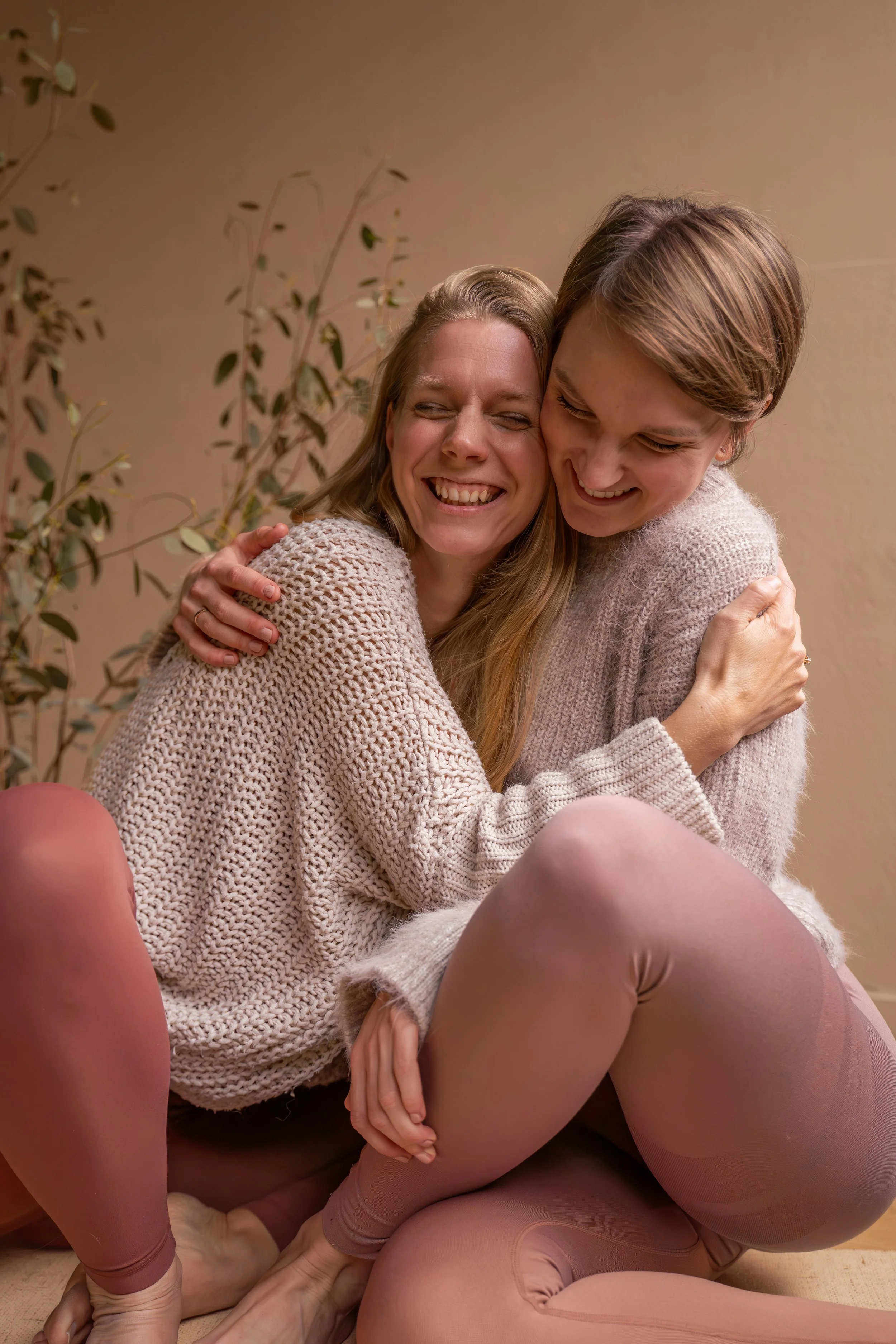
Navigating Differences
From a Yogic Perspective
Differences show up everywhere: in relationships, families, friendships, workplaces, and especially in moments of transition or stress. Sometimes they appear as small things: someone’s way of communicating, their pace, their preferences, their rhythm. Other times they show up in bigger ways: cultural backgrounds, values, expectations, interpretations of situations, or the way someone believes life “should” unfold.
For many people, the first reaction to difference is tension. A tightening inside. A subtle urgency to explain, correct, or justify one’s own way of seeing things.
It’s human. We often take our perspective for reality, forgetting that it is simply one lens among many.
Yoga invites us to look beyond the surface.
The Mind’s First Instinct:
“My Way Makes Sense”
When someone behaves differently from what we consider normal or logical, our minds often leap to conclusions:
“Why would they react that way?”
“That makes no sense.”
“But obviously this way is better.”
We don’t do this to be unkind.
We do it because we experience the world through our own conditioning, our upbringing, culture, habits, beliefs, and experiences.
Yoga describes this as asmita, the sense of “I-ness,” the idea that our viewpoint is the center of the map.
But the moment two viewpoints meet, something interesting happens: two completely valid inner worlds collide.
Not to create conflict, though that can happen, but to create awareness.
Anekāntavāda: The Wisdom of Many Perspectives
One of the most beautiful teachings that aligns with yoga philosophy is the idea that no single perspective holds the entire truth. Every person carries a part of the whole, shaped by their experiences and worldview.
When differences arise, this principle invites us to pause and ask:
What might this look like from another angle?
What truth could be living inside their perspective?
In daily life, this plays out in simple, relatable ways:
• One person values planning; another thrives in spontaneity.
• One communicates directly; another expresses subtly or intuitively.
• One makes decisions quickly; another needs time to process.
• One interprets silence as calm; another interprets it as distance.
• One sees uncertainty as exciting; another finds it unsettling.
None of these perspectives are wrong. They are simply different expressions of human experience.
The more we can hold multiple perspectives with an open mind, the more ease we create, for ourselves and for others.
The Space Between
When two ways of being meet, there is often a moment of friction. But that friction isn’t meant to divide us. It’s an invitation. The invitation is to soften around our own viewpoint, without losing ourselves. To listen, without needing to fix or defend. To be curious, rather than certain.
When two perspectives sit side by side, a third space opens
a space that holds both truths,
a space where understanding becomes possible,
a space where connection grows instead of contracts.
It is the yoga of relationship, the practice of holding softness in moments where the ego wants to hold tight.
Awareness as a Bridge
Yoga teaches us to observe the fluctuations of the mind, not to get lost in them. When differences arise, this awareness becomes a powerful bridge. Instead of reacting out of habit, we pause. Instead of assuming our way is the way, we breathe. Instead of shrinking into defensiveness, we widen into presence.
This doesn’t mean agreeing with everything or abandoning boundaries. It simply means we meet differences from a place of steadiness instead of reactivity.
The inner dialogue shifts from:
“Why are they like this?”
to
“What is the deeper truth here?”
“What are they seeing that I might be missing?”
“What can I learn from this moment?”
That shift alone can transform the entire relationship.
The Heart of the Practice
At its core, navigating differences through a yogic lens is about remembering:
• Everyone carries a unique inner world.
• Everyone’s responses make sense within the story of their life.
• Everyone’s truth is shaped by experiences we may never see.
• Everyone is doing the best they can with the awareness they have.
When we meet differences with softness rather than resistance, something profound happens:
The world becomes bigger.
The heart becomes more spacious.
Connections become more honest.
And life becomes less about being right, and more about being present.
Differences stop feeling like obstacles and begin to feel like pathways, pathways to understanding, pathways to empathy, pathways to deeper connection.
Yoga invites us not to eliminate differences, but to become spacious enough to hold them.
Because when we do, we discover a truth that is both humbling and freeing:
There is room for all of it.
All perspectives, all experiences, all truths.
*Dutch
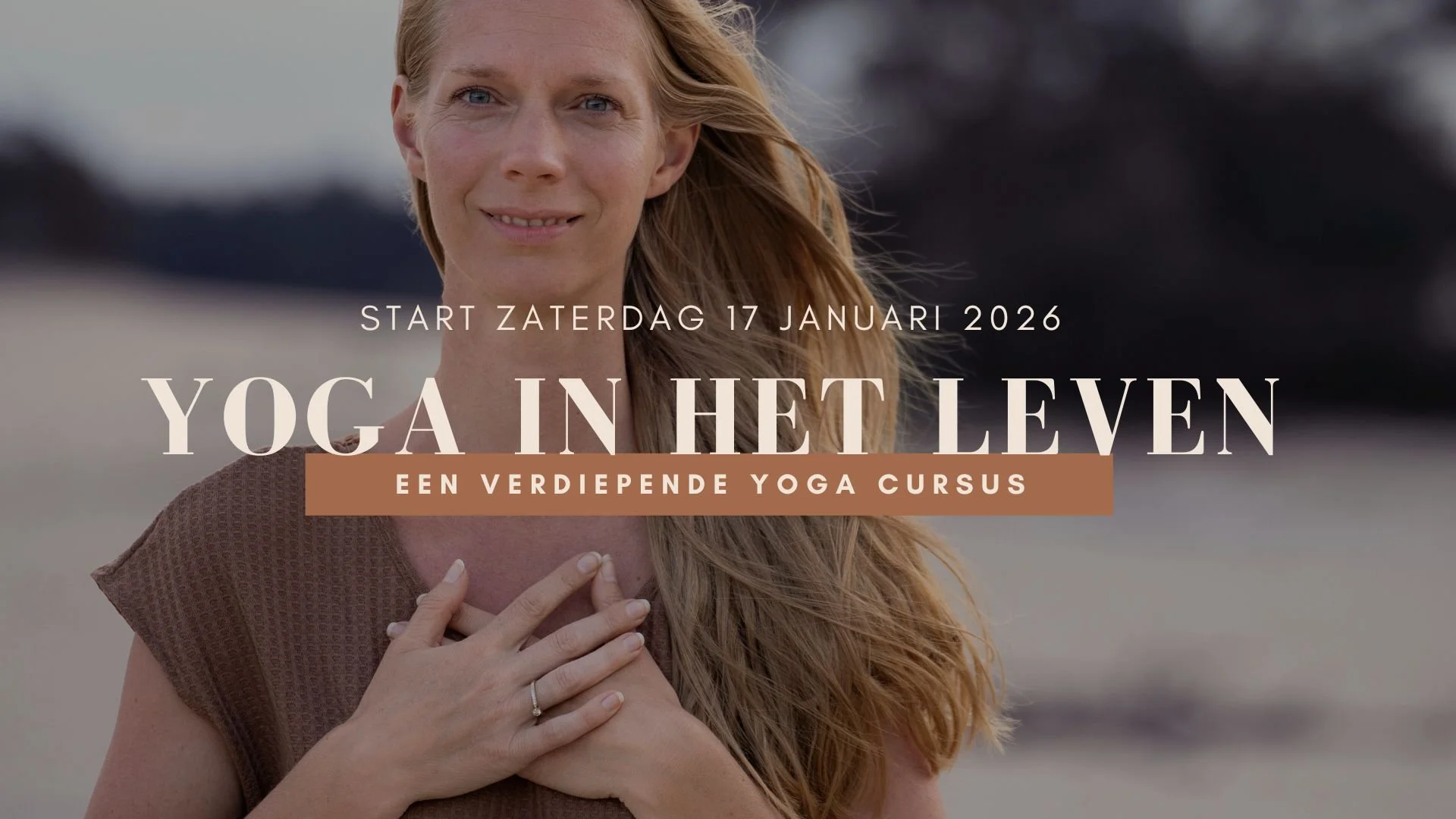
In de cursus Yoga in het Leven verdiepen we precies dit: hoe je de yogafilosofie midden in het dagelijks leven kunt toepassen.
We onderzoeken hoe de mind werkt, hoe identificatie met onze eigen kijk (asmita) ontstaat en hoe bewustzijn ruimte kan creëren in momenten van verschil, spanning of onbegrip. Niet om jezelf weg te cijferen, maar om steviger en zachter tegelijk aanwezig te zijn, in relaties, in keuzes en in jezelf.
Deze cursus nodigt je uit om te vertragen, te onderzoeken en te herinneren dat yoga een levenshouding is. Door reflectie, beoefening en uitwisseling leer je verschillen niet langer te zien als obstakels, maar als ingangen naar bewustzijn, verbinding en innerlijke rust. Zo wordt yoga iets wat je lééft, juist in de momenten waarop het leven schuurt.