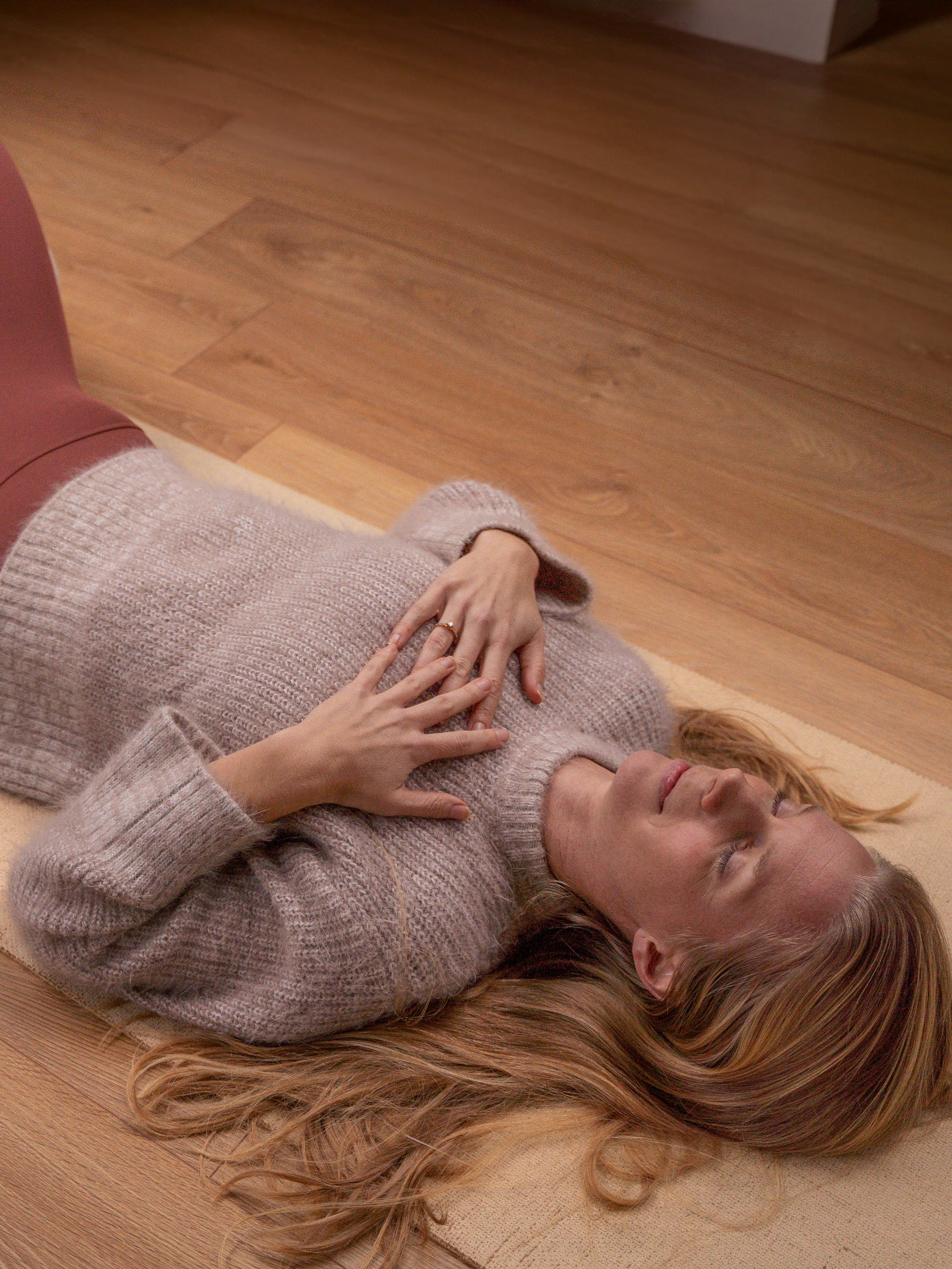
Winter as a Yoga practice
In a world that is constantly in motion, where growth, progress, and visibility are central values, winter is often experienced as a difficult season. As if life temporarily slows down too much, as if there is less energy available, less inspiration, less direction. The days are shorter, the light softer, nature retreats, and what was once visible gradually disappears from view. Precisely because of this, winter tends to evoke resistance. We want to move forward. We want brightness, colour, activity. And yet, it is this very season that may be inviting us into one of the most profound yoga practices of all.
Yoga is often understood as something we do: a practice on the mat, a sequence of postures, a breathing technique, a moment of concentration. But in its essence, yoga is not an activity, it is a way of attuning. A practice of listening. Of being present with what is, without forcing what is not yet ready to emerge. And in that sense, winter itself is a living yoga practice.
When we observe nature, we see that winter is not a flaw in the system. It is not an unnecessary pause, nor an emptiness that needs to be filled. It is an essential phase in the cycle of life. What appears still above ground is, beneath the surface, deeply alive. Roots grow deeper, energy is conserved, restoration takes place. Invisible, unspectacular, yet vital.
In our own lives, we have often lost touch with this layer. We live according to rhythms that hardly move with the seasons. Expectations remain the same, the pace stays high, stimulation continues uninterrupted. And when our bodies and energy systems signal fatigue, slowness, or a desire to withdraw during winter, we quickly label this as a problem. As if something is wrong, when perhaps something is simply asking to be honoured.
oga invites us to take this invitation seriously. Not by doing more, but by slowing down. By sensing what this season is asking of us, rather than what we expect of ourselves. Winter does not call for expansion, but for contraction. Not for manifestation, but for integration. Not for doing, but for being.
In yogic philosophy, the concept of pratyahara refers to the withdrawal of the senses, the turning inward of attention. Winter embodies this principle effortlessly. Less light, fewer external stimuli, less outward movement. When we resist this natural turning inward, exhaustion arises. When we allow ourselves to move with it, space is created, space to listen to the more subtle layers within.
This space is often experienced as emptiness. And emptiness can be confronting. In stillness, we meet ourselves without distraction or avoidance. Thoughts that are usually drowned out become audible. Feelings that have had no space come to the surface. Yet yoga teaches us that it is precisely within this emptiness that something essential resides. Emptiness is not absence, but potential. It is the space in which transformation can unfold, without needing to be forced.
Winter is associated with the element of water, with the kidneys and bladder, with our deepest reserves of energy. In yogic and Eastern traditions, these are seen as the storehouse of our vital essence. When we continue without replenishing, this source becomes depleted. We lose resilience, flexibility, and our capacity to move with life as it unfolds.
Practising yoga in winter does not necessarily mean doing more, often it means doing less. Gentler movement, more stillness, longer periods of rest. But above all, it is an inner posture: listening, attuning, respecting. Recognising that not-knowing, not-doing, and not-growing are also part of the path.
When we approach winter as a yoga practice, our relationship with this season begins to shift. We no longer need to endure it or soften it artificially. We are invited to sink into it. To rest in the quiet, trusting that beneath the surface something essential is being prepared. Not because we force it, but because life carries its own intelligence.
Perhaps this is the deepest teaching of winter as yoga: learning to trust rhythm, timing, and cyclical wisdom. Understanding that growth is not always visible. And that it is often in slowing down, turning inward, and allowing ourselves to seemingly do nothing, that the ground is prepared for everything that will one day bloom again.

A Gentle Invitation
If you feel a quiet resonance with this way of relating to winter, not as something to overcome, but as a season to inhabit, you are warmly invited into Rest & Restore, an online retreat moment created as a winter sanctuary.
A space to slow down, to reconnect with your inner rhythms, and to explore winter as a living yoga practice through movement, meditation, reflection, and rest.
You can find more information about Rest & Restore below.